Can empowering leadership teams improve how public organizations explore and exploit opportunities?
Timurs Umans; Elin Smith; William Andersson; William Planken
Audio > Play / StopShared leadership paired with performance-based controls significantly boosts organizational ambidexterity
Public organizations must innovate and optimize simultaneously—a balance called ambidexterity. A study of 85 Swedish municipal housing corporations finds that shared leadership in top management teams enhances this capacity, especially when combined with performance-oriented control systems.
Public organizations must innovate and optimize simultaneously—a balance called ambidexterity. A study of 85 Swedish municipal housing corporations finds that shared leadership in top management teams enhances this capacity, especially when combined with performance-oriented control systems.
Ambidexterity—the ability to simultaneously explore new possibilities and exploit existing capabilities—has become one of the most studied concepts in organization theory. But most of the research focuses on private firms operating in competitive markets. This study asks whether the same logic applies in public sector organizations, where mandates are set externally, resources are constrained, and accountability structures look fundamentally different.
The context is Swedish municipal housing corporations (MHCs)—public organizations responsible for providing affordable housing while also maintaining financial sustainability. Using survey data from 236 top management team members across 148 MHCs, the study examines how two organizational design choices—shared leadership within the top management team and management control system (MCS) design—interact to enable or inhibit ambidexterity.
What We Studied
The researchers measured three constructs through validated survey instruments. Shared leadership captured the degree to which strategic decision-making is distributed across the top management team rather than concentrated in the CEO. Management control systems were assessed along a spectrum from traditional (budget-focused, input-oriented) to contemporary (performance-based, output-oriented). Organizational ambidexterity was measured as the combined capacity for exploration (developing new services, markets, or processes) and exploitation (refining and optimizing existing operations).
The analytical approach used polynomial regression with response surface analysis—a method that captures how two variables interact in non-linear ways, rather than testing simple main effects. This is a meaningful methodological choice because the relationship between leadership, control, and ambidexterity is inherently configurational: it depends on how the variables combine, not just on their individual levels.
Key Insights
Shared leadership enables ambidexterity—but only with compatible controls
The central finding is that shared leadership alone does not guarantee ambidexterity. Its effect depends on the type of management control system in place. When shared leadership is paired with contemporary, performance-based controls, ambidexterity increases. The leadership team has both the authority to make strategic decisions and the organizational infrastructure to coordinate exploration and exploitation simultaneously. But when shared leadership operates within traditional, budget-focused control systems, the results are weaker. The control system constrains the very autonomy that shared leadership is supposed to enable.
Traditional controls can support ambidexterity—under centralized leadership
An unexpected finding: organizations with more centralized leadership (low shared leadership) paired with traditional controls achieved reasonable levels of ambidexterity. The explanation is fit—a top-down leadership style is compatible with input-oriented controls because both operate through the same coordination logic. The CEO directs, the budget system constrains, and the organization executes within well-defined boundaries. Ambidexterity here is more incremental, but it works because the leadership style and control system reinforce each other rather than creating friction.
Misalignment between leadership and control destroys ambidexterity
The worst outcomes occurred when leadership style and control systems were misaligned—either shared leadership with traditional controls, or centralized leadership with contemporary controls. In both cases, the organizational signals were contradictory. Shared leadership says "distribute authority and experiment"; traditional controls say "stay within budget and follow procedure." The resulting confusion suppresses both exploration and exploitation.
The public sector context intensifies these dynamics
Public organizations face external mandates, political oversight, and accountability requirements that private firms do not. These constraints make the fit between leadership and control even more consequential. MHCs cannot simply restructure their way out of misalignment—they must work within existing governance frameworks. The study shows that even within these constraints, careful design choices about how leadership and control systems interact can meaningfully increase organizational capacity for ambidexterity.
Takeaways
Design leadership and control systems as a package
Organizations pursuing ambidexterity should align their leadership style with their management control systems. Distributing strategic authority to the top management team works best when paired with performance-based controls that give leaders room to act. Centralizing authority works best when paired with traditional controls that provide clear boundaries.
Audit for misalignment before investing in new capabilities
Before launching exploration initiatives or innovation programs, organizations should check whether their current leadership and control configurations are compatible. A misaligned foundation will undermine even well-designed initiatives.
Lessons extend beyond the public sector
While the study focuses on municipal housing corporations, the core insight—that leadership style and control system design must be compatible for ambidexterity to emerge—applies broadly. Any organization facing simultaneous demands for innovation and efficiency, including family-controlled enterprises during transitions, can draw from this framework.
Impact
This study makes a distinctive contribution by testing ambidexterity theory in a public sector context and by showing that the interaction between leadership distribution and control system design matters more than either factor alone. The methodological approach—polynomial regression with response surface analysis—provides a more nuanced picture than standard moderation tests would allow. For practitioners, the message is that organizational design choices are interdependent: changing one element without adjusting the others can produce worse outcomes than the status quo. Leadership structure must be compatible with it.
The implications extend beyond public housing corporations. Any organization facing the simultaneous demands of innovation and efficiency—including nonprofits, cooperatives, and family-controlled enterprises during transitions—can draw lessons from the interplay between leadership distribution and control system design. The core insight is that leadership style and organizational infrastructure are not independent choices. They must be designed together.
Recommendations
- Invest in TMT development. Build leadership capacity across the team, not just at the top. Ensure that strategic decision-making involves multiple senior leaders with real authority.
- Transition toward performance-based controls. Move from legacy planning systems to more agile, output-oriented models that support autonomy and accountability simultaneously.
- Audit the leadership–control fit. Examine whether current management control systems are compatible with the leadership style the organization aspires to. Misalignment between distributed leadership and rigid controls creates friction.
- Use ambidexterity as a performance indicator. Track the organization’s balance between exploration and exploitation as a measure of strategic health, alongside traditional financial and operational metrics.

CeFEO's Authors
CeFEO counts more than 50 scholars and 30 affiliated researchers. Several studies and reports have consistently identified CeFEO as a leading research environment worldwide in the area of ownership and family business studies.
This research project, has been co-authored by the following CeFEO Members.

Reference
Spotlight highlights research-based findings only. If you’re interested in exploring this project further or delving into the theoretical and methodological details, we encourage you to contact the authors or read the full article for a comprehensive understanding.
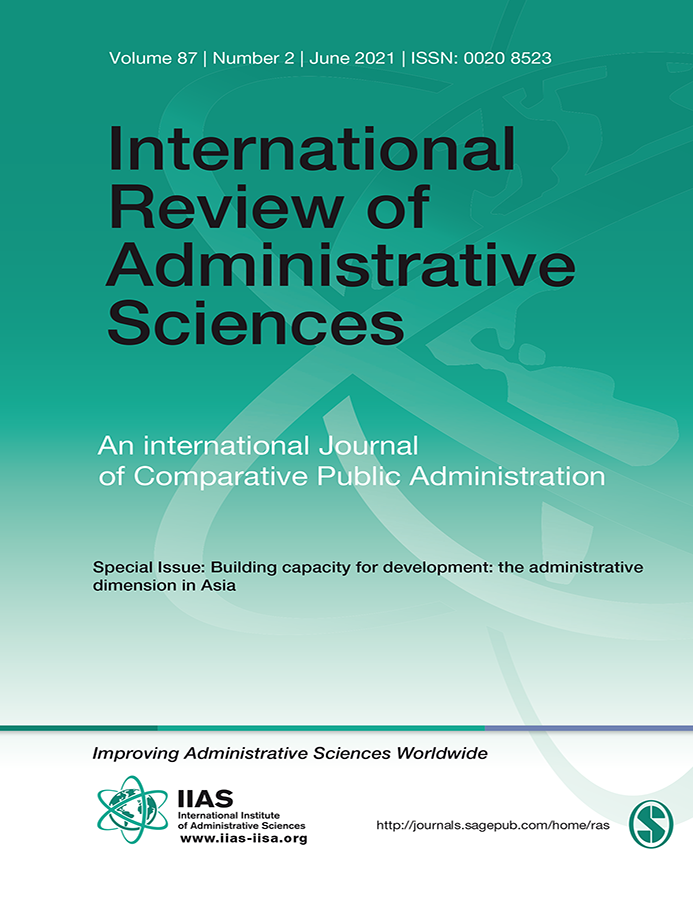
Umans, T., Smith, E., Andersson, W., & Planken, W. (2020). Top management teams’ shared leadership and ambidexterity: the role of management control systems. International Review of Administrative Sciences, 86(3), 444–462
https://doi.org/10.1177/0020852318783539
What is Spotlight?
Spotlight is an innovative online family business magazine designed to bridge the gap between cutting-edge research and the real-world needs of practitioners, owners, and policymakers. Drawing on the latest findings from the Centre for Family Entrepreneurship and Ownership (CeFEO) at Jönköping International Business School, Spotlight delivers insightful, accessible summaries of key research topics. Our mission is to keep the family business community informed and empowered by offering actionable insights, expert analyses, and forward-thinking strategies that enhance business leadership and ownership practices for long-term success.

This article is brought to you by the WIFU Foundation
Spotlight is generously supported by the WIFU Foundation, which promotes research, education, and dialogue in the field of family business. This partnership enables us to continue bridging academic insights and real-world practice for the advancement of responsible family entrepreneurship and ownership.
CeFEO's Authors
CeFEO counts more than 50 scholars and 30 affiliated researchers. Several studies and reports have consistently identified CeFEO as a leading research environment worldwide in the area of ownership and family business studies. This research project, has been co-authored by the following CeFEO Members.
Reference
Spotlight highlights research-based findings only. If you’re interested in exploring this project further or delving into the theoretical and methodological details, we encourage you to contact the authors or read the full article for a comprehensive understanding.
Umans, T., Smith, E., Andersson, W., & Planken, W. (2020). Top management teams’ shared leadership and ambidexterity: the role of management control systems. International Review of Administrative Sciences, 86(3), 444–462
https://doi.org/10.1177/0020852318783539
What is Spotlight?
Spotlight is an innovative, AI-powered, online family business magazine designed to bridge the gap between cutting-edge research and the real-world needs of practitioners, owners, and policymakers. Drawing on the latest findings from the Centre for Family Entrepreneurship and Ownership (CeFEO) at Jönköping International Business School, Spotlight delivers insightful, accessible summaries of key research topics. Our mission is to keep the family business community informed and empowered by offering actionable insights, expert analyses, and forward-thinking strategies that enhance business leadership and ownership practices for long-term success.
This article is brought to you by the WIFU Foundation
Spotlight is generously supported by the WIFU Foundation, which promotes research, education, and dialogue in the field of family business. This partnership enables us to continue bridging academic insights and real-world practice for the advancement of responsible family entrepreneurship and ownership.