How can family CEOs and active boards shape export strategies in family SMEs?
Jonathan Bauweraerts; Salvatore Sciascia; Lucia Naldi; Pietro Mazzola
Audio > Play / StopActive board advisory behavior unlocks international ambition in family CEO-led SMEs
Exporting is a powerful pathway to growth for family SMEs—but it's not always an easy one. Family CEOs often prefer to preserve legacy and control rather than embrace the uncertainties of international markets. However, this research uncovers a compelling shift: when family CEOs are supported by boards that provide strategic guidance, international connections, and resources, their risk aversion gives way to bold, global ambitions. In fact, these combinations can outperform traditional leadership setups. This article dives into how the synergy between family leadership and board service unlocks global growth in family SMEs.
Exporting is a powerful pathway to growth for family SMEs—but it's not always an easy one. Family CEOs often prefer to preserve legacy and control rather than embrace the uncertainties of international markets. However, this research uncovers a compelling shift: when family CEOs are supported by boards that provide strategic guidance, international connections, and resources, their risk aversion gives way to bold, global ambitions. In fact, these combinations can outperform traditional leadership setups. This article dives into how the synergy between family leadership and board service unlocks global growth in family SMEs.
Family-owned SMEs face a particular tension when it comes to international expansion. The emotional attachment to the business — its local roots, its community relationships, the founder’s legacy — can make the leap into foreign markets feel like a threat to identity rather than an opportunity for growth. Yet many family SMEs do export successfully. What distinguishes the ones that break through?
This study examines how two governance factors — CEO family membership and board involvement — interact to shape export intensity in family-controlled small and medium enterprises. Using data from 228 Italian family SMEs in the manufacturing sector, the authors test whether having a family CEO helps or hinders exporting, and how the board’s role as an advisory (rather than purely monitoring) body moderates that relationship.
What We Studied
The sample was drawn from AIDA, a comprehensive database of Italian firms, filtered for family SMEs in manufacturing with between 10 and 249 employees. Export intensity was measured as the ratio of export sales to total sales. The two key governance variables were family CEO status (whether the CEO is a member of the controlling family) and board involvement (the extent to which the board actively participates in strategic decision-making, measured through a validated multi-item scale capturing advisory behavior).
The theoretical framework combines upper echelons theory (arguing that CEO characteristics shape strategic outcomes) with resource dependence theory (positioning the board as a source of knowledge, networks, and legitimacy). The central hypothesis is that family CEOs, while deeply committed to the firm, may lack the international experience or risk tolerance needed for aggressive exporting — but that an actively involved board can compensate for these limitations by providing the strategic resources and encouragement the CEO needs.
Key Insights
Family CEOs are associated with lower export intensity
The baseline finding is that firms led by family CEOs tend to export less than those led by non-family CEOs. The mechanism is not incompetence but orientation: family CEOs are more likely to prioritize domestic stability, risk avoidance, and the preservation of local relationships — all of which are consistent with protecting socioemotional wealth but work against the uncertainty and resource commitment that international expansion requires. This finding aligns with prior research showing that family involvement in management can create a conservative strategic bias.
Board involvement transforms the family CEO’s export capacity
The study’s most important finding is the interaction effect. When the board is actively involved in strategic decision-making — providing advice, sharing networks, and participating in market analysis — the negative association between family CEO status and export intensity is significantly reduced. In firms with highly involved boards, family CEOs export at levels comparable to non-family CEOs. The board acts as a resource bridge, providing the international knowledge, external legitimacy, and strategic confidence that the family CEO may lack. This is not about the board overriding the CEO. It is about the board enabling the CEO to act on opportunities they might otherwise avoid.
Board structure alone is not enough — behavior matters
The study distinguishes between board composition (who sits on the board) and board behavior (what the board actually does). The finding is that board involvement — active advisory behavior — is the mechanism that matters, not merely the presence of independent or external directors. A well-composed board that remains passive provides little strategic benefit. A smaller, less formally independent board that actively engages in strategic discussions can have a transformative effect on export decisions. This distinction is critical for family SMEs, where boards are often small and populated by trusted insiders rather than independent professionals.
The advisory role is more consequential than the monitoring role
In the family SME context, the board’s value for internationalization comes primarily from its advisory function — providing knowledge, contacts, and strategic perspectives — rather than from its monitoring function. Family CEOs who already own the firm have less need for financial oversight than for strategic guidance. The research suggests that family SMEs seeking to internationalize should invest in building board advisory capacity rather than simply adding independent directors for governance compliance.
Takeaways
Activate your board as a strategic resource
Family SMEs that want to grow internationally should deliberately engage their boards in strategic conversations about target markets, entry modes, and international partnerships. The board’s networks and experience can reduce the uncertainty that makes exporting feel risky, particularly for family CEOs with deep domestic roots but limited international exposure.
Prioritize board behavior over board structure
Adding an independent director who attends quarterly meetings but contributes little strategic input will not improve export performance. The research shows that what the board does — how actively it advises, challenges, and supports — matters more than who sits on it. Family SMEs should evaluate their boards on the quality of strategic engagement, not just on composition metrics.
Recognize the family CEO’s export hesitation as addressable
The study does not suggest that family CEOs are inherently incapable of leading international expansion. It shows that their conservative bias can be offset by the right governance environment. Advisors and board members who understand this dynamic can provide the specific support — market intelligence, introductions, and strategic framing — that helps a family CEO move from hesitation to action.
Impact
This study advances both the family business and international business literatures by showing that governance mechanisms interact in ways that shape strategic outcomes. The contribution is not just that family CEOs export less, but that this effect is contingent on board behavior — a finding that opens practical pathways for intervention. For family SMEs, the message is that governance is not just about oversight. It is about building the advisory infrastructure that enables strategic ambition. The research also reinforces a broader point: in family firms, the relationship between ownership, management, and governance is not additive. It is configurational. Understanding how these elements interact is essential for making governance work in practice.
Recommendations
- For family CEOs: View the board as a resource, not a constraint. Engage directors in strategic conversations about international markets. Their networks and experience can reduce the uncertainty that makes exporting feel risky.
- For boards: Shift from a monitoring mindset to an advisory one, especially when the firm is considering international expansion. Provide contacts, market intelligence, and strategic scenarios — not just financial oversight.
- For advisors: When recommending governance changes for family SMEs pursuing exports, prioritize board behavioral transformation over structural changes. Adding an independent director who monitors is less effective than adding one who advises.
- For policymakers: Support programs that connect family SME boards with internationally experienced directors. Board matching services, governance training, and export mentoring programs can accelerate the advisory capacity that this research identifies as critical.

CeFEO's Authors
CeFEO counts more than 50 scholars and 30 affiliated researchers. Several studies and reports have consistently identified CeFEO as a leading research environment worldwide in the area of ownership and family business studies.
This research project, has been co-authored by the following CeFEO Members.


Reference
Spotlight highlights research-based findings only. If you’re interested in exploring this project further or delving into the theoretical and methodological details, we encourage you to contact the authors or read the full article for a comprehensive understanding.
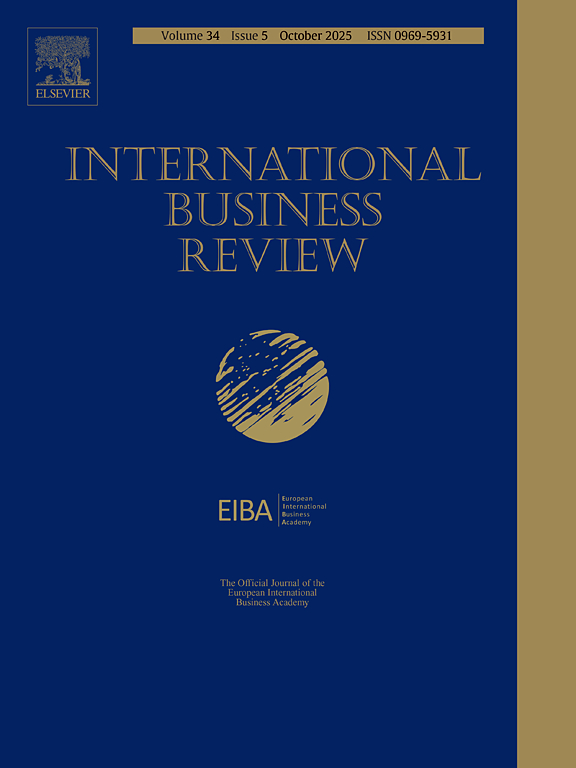
Bauweraerts, J., Sciascia, S., Naldi, L., & Mazzola, P. (2019). Family CEO and board service: Turning the tide for export scope in family SMEs. International Business Review, 28(4), 101583.
https://doi.org/10.1016/j.ibusrev.2019.05.003
What is Spotlight?
Spotlight is an innovative online family business magazine designed to bridge the gap between cutting-edge research and the real-world needs of practitioners, owners, and policymakers. Drawing on the latest findings from the Centre for Family Entrepreneurship and Ownership (CeFEO) at Jönköping International Business School, Spotlight delivers insightful, accessible summaries of key research topics. Our mission is to keep the family business community informed and empowered by offering actionable insights, expert analyses, and forward-thinking strategies that enhance business leadership and ownership practices for long-term success.

This article is brought to you by the WIFU Foundation
Spotlight is generously supported by the WIFU Foundation, which promotes research, education, and dialogue in the field of family business. This partnership enables us to continue bridging academic insights and real-world practice for the advancement of responsible family entrepreneurship and ownership.
CeFEO's Authors
CeFEO counts more than 50 scholars and 30 affiliated researchers. Several studies and reports have consistently identified CeFEO as a leading research environment worldwide in the area of ownership and family business studies. This research project, has been co-authored by the following CeFEO Members.
Reference
Spotlight highlights research-based findings only. If you’re interested in exploring this project further or delving into the theoretical and methodological details, we encourage you to contact the authors or read the full article for a comprehensive understanding.
Bauweraerts, J., Sciascia, S., Naldi, L., & Mazzola, P. (2019). Family CEO and board service: Turning the tide for export scope in family SMEs. International Business Review, 28(4), 101583.
https://doi.org/10.1016/j.ibusrev.2019.05.003
What is Spotlight?
Spotlight is an innovative, AI-powered, online family business magazine designed to bridge the gap between cutting-edge research and the real-world needs of practitioners, owners, and policymakers. Drawing on the latest findings from the Centre for Family Entrepreneurship and Ownership (CeFEO) at Jönköping International Business School, Spotlight delivers insightful, accessible summaries of key research topics. Our mission is to keep the family business community informed and empowered by offering actionable insights, expert analyses, and forward-thinking strategies that enhance business leadership and ownership practices for long-term success.
This article is brought to you by the WIFU Foundation
Spotlight is generously supported by the WIFU Foundation, which promotes research, education, and dialogue in the field of family business. This partnership enables us to continue bridging academic insights and real-world practice for the advancement of responsible family entrepreneurship and ownership.