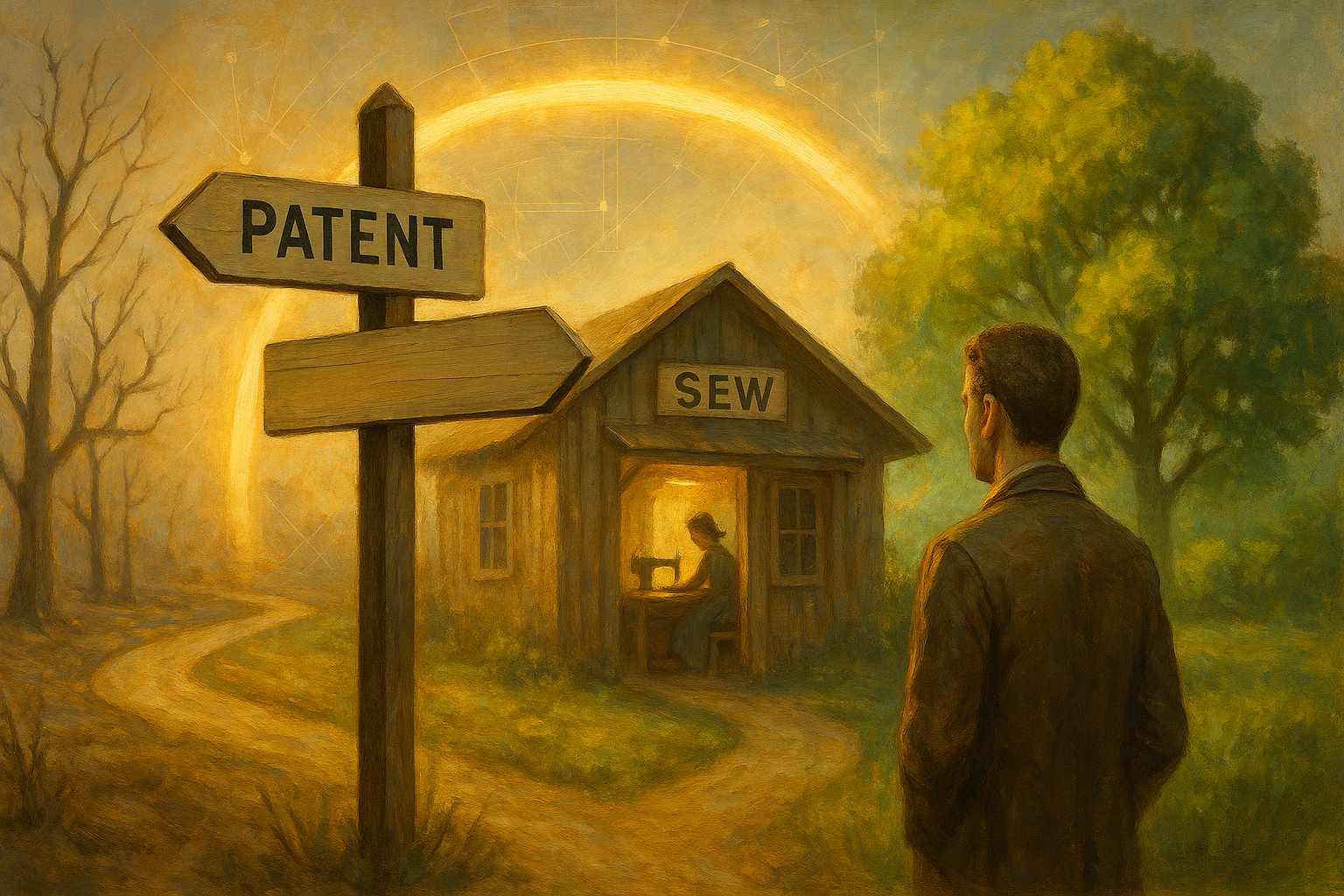
How can invented heritage shape brand identity and consumer trust?
Olof Brunninge; Benjamin Julien Hartmann
Audio > Play / StopWhen companies fabricate their past, the line between strategic storytelling and deception blurs
Some companies invent their corporate heritage—fabricating founders, romanticizing origins, even purchasing defunct brands for their symbolic capital. This conceptual paper examines how and why, and what it means for authenticity in branding.
Some companies invent their corporate heritage—fabricating founders, romanticizing origins, even purchasing defunct brands for their symbolic capital. This conceptual paper examines how and why, and what it means for authenticity in branding.
Authenticity is one of the most valued currencies in branding. Consumers reward companies that feel genuine, and heritage—a real history, a founding story, a connection to place and tradition—is one of the most powerful ways to signal authenticity. But what happens when a company’s heritage is not entirely real? What if the founding narrative was constructed after the fact, borrowing elements from the past to build a brand identity that never existed in quite that form?
This study examines the concept of invented heritage—the deliberate construction of a brand’s historical narrative using selective, reinterpreted, or fabricated elements—and tests how it affects consumer trust and purchase intentions. Using experimental data from Swedish and Italian consumers, the authors show that invented heritage can be just as effective as authentic heritage in building brand credibility, provided the narrative is coherent and emotionally resonant.
What We Studied
The researchers conducted a series of experiments in which consumers evaluated brands with different types of heritage claims. The experimental design manipulated whether the brand’s heritage was presented as authentic (historically accurate and documented), invented (constructed from selected historical elements but not strictly factual), or absent (no heritage claim at all). Consumer responses were measured across several dimensions: perceived authenticity, brand trust, purchase intention, and willingness to pay a premium.
The theoretical framework draws on brand heritage theory and signaling theory. Brand heritage theory argues that a firm’s history, when actively communicated, creates a perception of longevity, stability, and trustworthiness. Signaling theory explains why heritage claims work: they serve as credible signals of quality because building a long history is costly and difficult to fake. The study’s twist is to test what happens when the heritage signal is, in fact, at least partly fabricated.
Key Insights
Invented heritage works—consumers respond to narrative coherence, not historical accuracy
The central finding is that consumers respond positively to invented heritage—in some conditions, almost as positively as to authentic heritage. The mechanism is narrative coherence: as long as the brand’s story feels internally consistent, emotionally engaging, and connected to recognizable cultural touchstones, consumers accept it as a signal of authenticity. They are not fact-checking founding dates. They are evaluating whether the story feels right.
Heritage of any kind outperforms no heritage
Both authentic and invented heritage claims significantly outperformed the no-heritage condition across all consumer response measures. Brands with heritage narratives were perceived as more trustworthy, more authentic, and more worth paying a premium for. The absence of heritage left brands in a weaker competitive position regardless of product quality. For family businesses, this is a strong signal: if you have a story, tell it. The cost of silence is higher than the risk of narrative imperfection.
Cultural context moderates the effect
The study finds differences between Swedish and Italian consumers. Italian consumers, embedded in a culture where artisanal heritage and regional identity carry particularly strong weight, were more responsive to heritage claims overall and more sensitive to the distinction between authentic and invented heritage. Swedish consumers responded positively to both but showed less differentiation. The implication is that the effectiveness of invented heritage depends on the cultural value placed on historical authenticity in the target market.
Emotional resonance matters more than factual precision
Across conditions, the strongest predictor of positive consumer response was not the historical accuracy of the heritage claim but its emotional resonance—whether the narrative evoked feelings of tradition, craftsmanship, continuity, and care. Brands that told emotionally compelling stories, even when those stories were partially constructed, outperformed brands with accurate but dry historical descriptions. The best heritage branding is storytelling, not documentation.
Takeaways
Every family business has a story worth telling
Many family firms underestimate the branding value of their history. Even firms without a dramatic founding narrative can construct compelling heritage stories from real elements: the values of the founder, the evolution of the product, the connection to a place or community. The research shows that selective curation of real historical elements—invented heritage—can be as effective as a fully documented authentic narrative.
Invest in narrative quality, not just historical accuracy
The brand’s story should be emotionally resonant, internally coherent, and connected to what the brand represents today. Commissioning a dry corporate history is less valuable than developing a narrative that makes customers feel something. Heritage branding is closer to editorial storytelling than to archival research.
Adapt heritage claims to cultural context
In markets where artisanal tradition and regional identity are culturally important (such as Italy, France, or Japan), consumers may scrutinize heritage claims more closely. In markets where brand narrative and experience carry more weight than provenance (such as Scandinavia or the U.S.), invented heritage may face less resistance. Tailor the depth and specificity of heritage claims to the cultural expectations of the target audience.
Impact
This study contributes to both brand management and family business research by demonstrating that heritage is not a fixed asset but a narrative resource that can be strategically constructed. For family businesses, the implication is liberating: you do not need a 200-year history to benefit from heritage branding. You need a coherent, emotionally compelling story that connects your past to your present. The research also raises ethical questions about the boundaries of invented heritage—questions the authors acknowledge but do not fully resolve. The line between creative storytelling and consumer deception is context-dependent, and firms should navigate it with care.
Recommendations
- Audit your heritage assets. Identify the historical elements—founders, locations, products, values, milestones—that can anchor a compelling brand narrative, even if the full story requires some creative assembly.
- Develop a heritage narrative strategy. Work with brand strategists or storytellers to craft a narrative that is emotionally resonant and aligned with the brand’s current positioning. The goal is coherence, not completeness.
- Test heritage claims with target consumers. Before committing to a heritage narrative, test it with representative audiences. Cultural sensitivity and perceived authenticity vary across markets.
- Use heritage to explain, not just to decorate. The most effective heritage narratives are those that help consumers understand why the firm operates as it does today, not as nostalgia for its own sake.

CeFEO's Authors
CeFEO counts more than 50 scholars and 30 affiliated researchers. Several studies and reports have consistently identified CeFEO as a leading research environment worldwide in the area of ownership and family business studies.
This research project, has been co-authored by the following CeFEO Members.

Reference
Spotlight highlights research-based findings only. If you’re interested in exploring this project further or delving into the theoretical and methodological details, we encourage you to contact the authors or read the full article for a comprehensive understanding.
Brunninge, O., & Hartmann, B. J. (2019). Inventing a past: Corporate heritage as dialectical relationships of past and present. Marketing Theory, 19(2), 229–234.
https://doi.org/10.1177/1470593118790625
What is Spotlight?
Spotlight is an innovative online family business magazine designed to bridge the gap between cutting-edge research and the real-world needs of practitioners, owners, and policymakers. Drawing on the latest findings from the Centre for Family Entrepreneurship and Ownership (CeFEO) at Jönköping International Business School, Spotlight delivers insightful, accessible summaries of key research topics. Our mission is to keep the family business community informed and empowered by offering actionable insights, expert analyses, and forward-thinking strategies that enhance business leadership and ownership practices for long-term success.

This article is brought to you by the WIFU Foundation
Spotlight is generously supported by the WIFU Foundation, which promotes research, education, and dialogue in the field of family business. This partnership enables us to continue bridging academic insights and real-world practice for the advancement of responsible family entrepreneurship and ownership.
CeFEO's Authors
CeFEO counts more than 50 scholars and 30 affiliated researchers. Several studies and reports have consistently identified CeFEO as a leading research environment worldwide in the area of ownership and family business studies. This research project, has been co-authored by the following CeFEO Members.
Reference
Spotlight highlights research-based findings only. If you’re interested in exploring this project further or delving into the theoretical and methodological details, we encourage you to contact the authors or read the full article for a comprehensive understanding.
Brunninge, O., & Hartmann, B. J. (2019). Inventing a past: Corporate heritage as dialectical relationships of past and present. Marketing Theory, 19(2), 229–234.
https://doi.org/10.1177/1470593118790625
What is Spotlight?
Spotlight is an innovative, AI-powered, online family business magazine designed to bridge the gap between cutting-edge research and the real-world needs of practitioners, owners, and policymakers. Drawing on the latest findings from the Centre for Family Entrepreneurship and Ownership (CeFEO) at Jönköping International Business School, Spotlight delivers insightful, accessible summaries of key research topics. Our mission is to keep the family business community informed and empowered by offering actionable insights, expert analyses, and forward-thinking strategies that enhance business leadership and ownership practices for long-term success.
This article is brought to you by the WIFU Foundation
Spotlight is generously supported by the WIFU Foundation, which promotes research, education, and dialogue in the field of family business. This partnership enables us to continue bridging academic insights and real-world practice for the advancement of responsible family entrepreneurship and ownership.