What can Swarovski teach family firms about opening up innovation?
Justyna Dąbrowska; Henry Lopez-Vega; Paavo Ritala
Audio > Play / StopA fifth-generation crystal company's journey from secrecy to open innovation offers a roadmap
What does it take for a 120-year-old family business to reinvent itself? For Swarovski, the answer was to embrace openness—transforming from a secretive, inward-looking innovator into a boundary-spanning, ecosystem-driven organization. This article tells the story of Swarovski’s radical shift from closed to open innovation, and how it overcame organizational rigidity while preserving its brand legacy. Family businesses looking to adapt in the face of digital disruption will find practical lessons in how to build dynamic capabilities without compromising core identity.
What does it take for a 120-year-old family business to reinvent itself? For Swarovski, the answer was to embrace openness—transforming from a secretive, inward-looking innovator into a boundary-spanning, ecosystem-driven organization. This article tells the story of Swarovski’s radical shift from closed to open innovation, and how it overcame organizational rigidity while preserving its brand legacy. Family businesses looking to adapt in the face of digital disruption will find practical lessons in how to build dynamic capabilities without compromising core identity.
Family firms are often praised for their long-term orientation, deep domain expertise, and willingness to invest patiently in proprietary knowledge. But these same strengths can become barriers when the competitive landscape demands a different kind of innovation — one that draws on external ideas, partnerships, and technologies. Open innovation, the practice of deliberately sourcing knowledge from outside the firm and sharing internal knowledge outward, has transformed how many industries operate. Yet family businesses have been slow to adopt it.
This in-depth case study of Swarovski, the Austrian family-controlled crystal manufacturer, examines how one of the world’s most established family firms navigated the transition from a closed, internally focused innovation model to a more open one. The study traces this shift over more than a decade, identifying the organizational, cultural, and governance factors that enabled — and constrained — the change.
What We Studied
The research uses a single in-depth longitudinal case study methodology, drawing on 41 semi-structured interviews with Swarovski managers, family members, and innovation specialists, complemented by archival data, internal documents, and site visits. The study covers the period from the early 2000s through the mid-2010s, during which Swarovski progressively shifted its innovation approach from fully closed to selectively open.
The theoretical framework combines open innovation theory (which explains how firms manage knowledge flows across organizational boundaries) with family firm governance theory (which highlights how family ownership creates distinctive strategic and cultural conditions). The central question is how family-specific factors — identity, control preferences, long-term orientation, and paternalistic leadership — shape the adoption and implementation of open innovation practices.
Key Insights
Family identity initially blocked openness
Swarovski’s identity was built on proprietary craftsmanship and closely guarded trade secrets. For decades, the firm’s competitive advantage was defined by what it knew that others did not. This created a deep cultural resistance to sharing knowledge with outsiders or admitting that external partners might contribute valuable ideas. The family’s sense of pride in its unique capabilities made openness feel like a dilution of identity rather than a strategic opportunity. Early attempts at collaboration were met with skepticism and internal resistance.
A dedicated innovation unit served as a bridge
The breakthrough came when Swarovski created a dedicated innovation unit — partially separated from the core business — that could experiment with open approaches without threatening the identity of the main organization. This unit served as a “safe space” for external collaboration, allowing the firm to test open innovation on a limited scale before extending it more broadly. The unit’s success built internal credibility and demonstrated that openness could coexist with the firm’s proprietary strengths.
Leadership transition accelerated openness
Generational transition within the family played a significant role. Younger family members, educated and networked outside the firm, brought a more cosmopolitan perspective and were more receptive to external collaboration. Their involvement in governance and strategy provided the legitimacy needed to challenge the closed innovation norm. The transition was not a rupture but a gradual shift, with the incoming generation building on the foundation laid by the dedicated innovation unit.
Control preferences shaped the form of openness
Even as Swarovski became more open, the family’s preference for control influenced how openness was implemented. The firm favored selective, relationship-based partnerships over broad, market-based open innovation platforms. Collaborations were carefully chosen and closely managed. Knowledge sharing was governed by clear boundaries — certain domains remained proprietary while others were opened for co-development. This “controlled openness” reflects a family firm logic: the family was willing to open the innovation process, but not at the cost of losing strategic control over the firm’s core knowledge assets.
Long-term orientation became an enabler, not a constraint
While the family’s long-term orientation initially reinforced conservatism, it eventually became an enabler of open innovation. Once the family recognized that openness was necessary for long-term competitiveness, their willingness to invest patiently in building collaborative capabilities — without demanding immediate financial returns — gave the innovation unit time to develop, fail, learn, and scale. Non-family firms under short-term shareholder pressure might have abandoned the effort before it matured.
Takeaways
Create a dedicated space for open innovation
Family firms with strong proprietary cultures should not try to transform the entire organization at once. A dedicated innovation unit, partially shielded from the core business, can experiment with external collaboration and build internal credibility before the practice is extended more broadly.
Use generational transition as a catalyst
Incoming family members often bring external perspectives and networks that can accelerate innovation openness. Governance structures should create space for next-generation voices in innovation strategy, even before formal leadership transition occurs.
Design openness with control boundaries
Full openness is neither necessary nor advisable for most family firms. Selective, relationship-based partnerships that preserve control over core knowledge assets can deliver the benefits of open innovation without the identity and governance costs of unrestricted knowledge sharing.
Impact
This study makes a distinctive contribution by providing the first detailed, longitudinal account of how a major family firm transitions from closed to open innovation. The Swarovski case shows that the shift is not a binary switch but a gradual, culturally negotiated process shaped by family identity, governance preferences, and generational dynamics. For scholars, the paper bridges two literatures — open innovation and family business — that have developed largely in isolation. For practitioners, it provides a realistic model of how family firms can embrace external collaboration without abandoning the proprietary strengths that define them.
Recommendations
- For family leaders: Champion openness personally. The transition to open innovation in a family firm requires visible commitment from the family, not just from professional managers. Employees take their cues from ownership.
- For boards: Include members with experience in open innovation or external collaboration. They can normalize the practice and help the family see it as a strategic choice rather than a cultural threat.
- For innovation managers: Build internal platforms for cross-departmental knowledge sharing before launching external partnerships. The firm needs to learn how to collaborate internally before it can collaborate externally.
- For researchers: More longitudinal case studies of innovation transitions in family firms are needed. The Swarovski case is compelling precisely because it traces the process over time — snapshot studies cannot capture the cultural and organizational dynamics at play.

CeFEO's Authors
CeFEO counts more than 50 scholars and 30 affiliated researchers. Several studies and reports have consistently identified CeFEO as a leading research environment worldwide in the area of ownership and family business studies.
This research project, has been co-authored by the following CeFEO Members.
Reference
Spotlight highlights research-based findings only. If you’re interested in exploring this project further or delving into the theoretical and methodological details, we encourage you to contact the authors or read the full article for a comprehensive understanding.
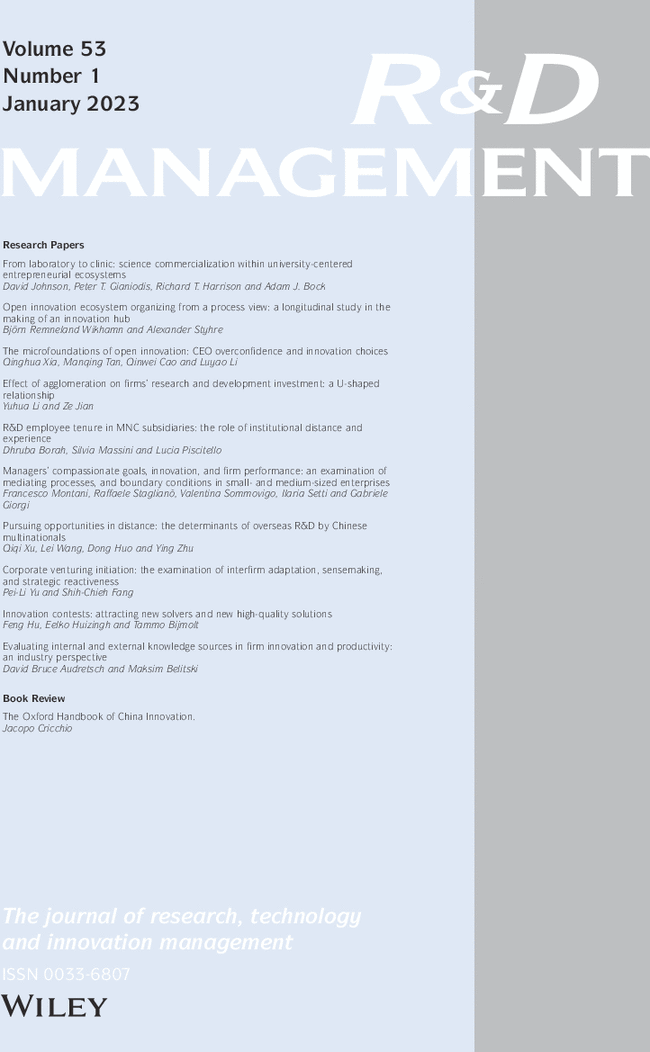
Dąbrowska, J., Lopez‐Vega, H., & Ritala, P. (2019). Waking the sleeping beauty: Swarovski’s open innovation journey. R&D Management, 49(5), 775–788.
https://doi.org/10.1111/radm.12374
What is Spotlight?
Spotlight is an innovative online family business magazine designed to bridge the gap between cutting-edge research and the real-world needs of practitioners, owners, and policymakers. Drawing on the latest findings from the Centre for Family Entrepreneurship and Ownership (CeFEO) at Jönköping International Business School, Spotlight delivers insightful, accessible summaries of key research topics. Our mission is to keep the family business community informed and empowered by offering actionable insights, expert analyses, and forward-thinking strategies that enhance business leadership and ownership practices for long-term success.

This article is brought to you by the WIFU Foundation
Spotlight is generously supported by the WIFU Foundation, which promotes research, education, and dialogue in the field of family business. This partnership enables us to continue bridging academic insights and real-world practice for the advancement of responsible family entrepreneurship and ownership.
CeFEO's Authors
CeFEO counts more than 50 scholars and 30 affiliated researchers. Several studies and reports have consistently identified CeFEO as a leading research environment worldwide in the area of ownership and family business studies. This research project, has been co-authored by the following CeFEO Members.
Reference
Spotlight highlights research-based findings only. If you’re interested in exploring this project further or delving into the theoretical and methodological details, we encourage you to contact the authors or read the full article for a comprehensive understanding.
Dąbrowska, J., Lopez‐Vega, H., & Ritala, P. (2019). Waking the sleeping beauty: Swarovski’s open innovation journey. R&D Management, 49(5), 775–788.
https://doi.org/10.1111/radm.12374
What is Spotlight?
Spotlight is an innovative, AI-powered, online family business magazine designed to bridge the gap between cutting-edge research and the real-world needs of practitioners, owners, and policymakers. Drawing on the latest findings from the Centre for Family Entrepreneurship and Ownership (CeFEO) at Jönköping International Business School, Spotlight delivers insightful, accessible summaries of key research topics. Our mission is to keep the family business community informed and empowered by offering actionable insights, expert analyses, and forward-thinking strategies that enhance business leadership and ownership practices for long-term success.
This article is brought to you by the WIFU Foundation
Spotlight is generously supported by the WIFU Foundation, which promotes research, education, and dialogue in the field of family business. This partnership enables us to continue bridging academic insights and real-world practice for the advancement of responsible family entrepreneurship and ownership.