How can a family firm grow stronger each time it is knocked down?
Celina Smith; Emanuela Rondi; Alfredo De Massis; Mattias Nordqvist
Audio > Play / StopA century-old smokehouse reveals how surviving one crisis builds strength to beat the next.
A London family firm survived a fire, a flood, an Olympic eviction and a pandemic — and grew after each one. Researchers call the thing that carried it organizational fortitude, and they show how it is built, used, and occasionally overdone.
A London family firm survived a fire, a flood, an Olympic eviction and a pandemic — and grew after each one. Researchers call the thing that carried it organizational fortitude, and they show how it is built, used, and occasionally overdone.
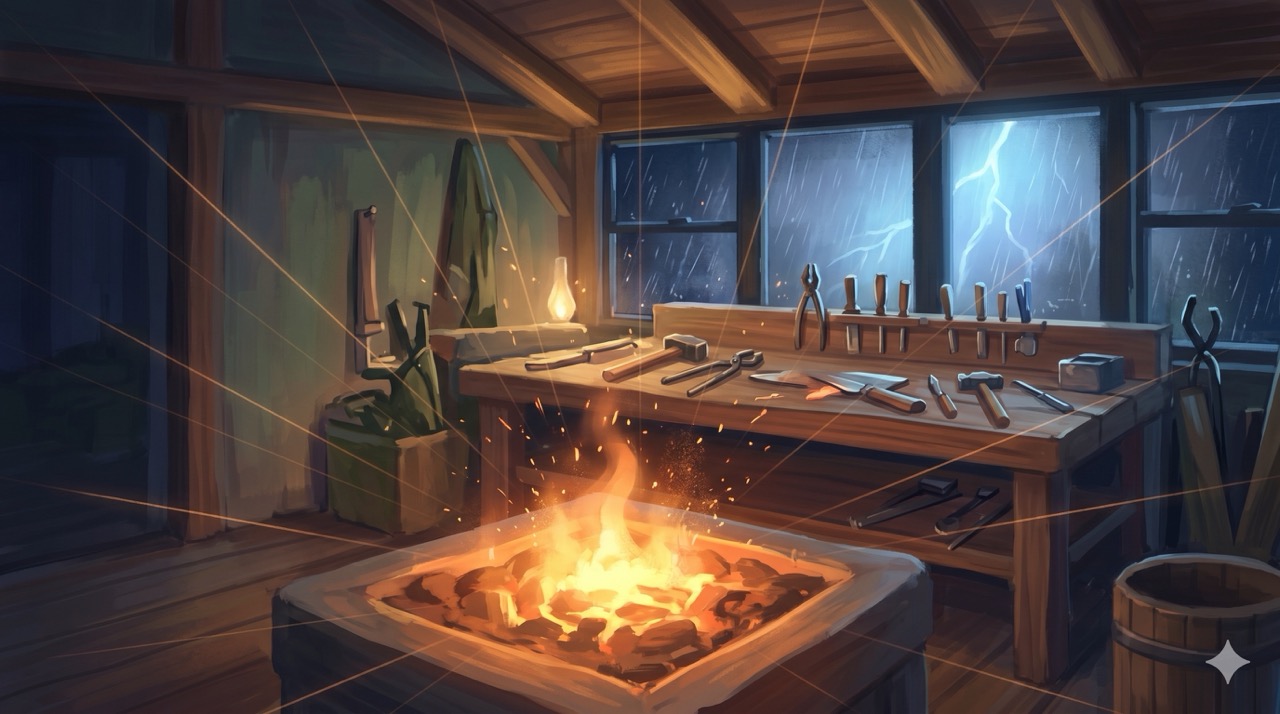
In October 1998, the H. Forman & Son smokehouse in East London burned down overnight. The family firm was almost a century old, and for a few hours it looked finished. Two years later the rebuilt factory flooded when the river Lea burst its banks. Then London won the 2012 Olympics, and the authorities ordered the firm off the land it owned to clear ground for the stadium. Then COVID-19 shut the restaurants it supplied. Four threats to survival in roughly twenty years.
Here is the strange part. After every one of them, Formans came back bigger — a new factory, a prime riverside site opposite the Olympic park, fresh product lines, new sales channels. A study in the Journal of Management asks how a firm manages that, and what the answer means for any business now living through one shock after another.
What we studied
Celina Smith, Emanuela Rondi, Alfredo De Massis and Mattias Nordqvist followed Formans for almost a decade. Formans is a fourth-generation maker of smoked salmon, founded by an East European émigré in 1905, employing around 95 people and holding, by its own account, the title of London's oldest surviving smokehouse. The team ran 36 interviews — with CEO Lance Forman, his parents, current and former staff, the company lawyer, local officials and journalists — lasting anywhere from half an hour to three hours. They layered in archives, site visits, press and television coverage, and the CEO's own memoir of the first three crises.
That design is the point. One firm, watched over time, across four very different shocks, let the authors see what most resilience studies cannot: not just how a company survives a crisis, but what happens between crises, and whether surviving one changes how it meets the next. They build theory by abduction, letting the case argue back at the literature rather than testing a fixed hypothesis. A single firm is also the study's main limitation, and the authors say so plainly — you cannot generalise survival from one survivor.
Key insights
The firm built something the authors call organizational fortitude
Fortitude here is not a personality trait. It is an approach a firm develops, made of three ingredients: a propensity to stand resolute, reserves of resources it can reach for, and values it shares with the people around it. When the three line up, the firm meets a shock already convinced it can win. Lance Forman said he is at his sharpest when under attack — that when things are calm he barely knows what to do with himself.
It grows at three levels at once
Fortitude did not come from the leader alone. The authors trace it to three interlocking levels. The family supplied custodianship — a sense that the business was an heirloom to be guarded, and a duty handed down through the generations; Marcel Forman even adopted his wife's family name to carry it. The firm supplied what the authors call surrogation: long-serving employees who behaved like kin, worked through the night, and returned the owner's commitment as loyalty. And Lance acted as the linchpin, the single figure straddling family and business, concentrating ownership and decisions, able to move both sets of resources fast.
Resilience showed up as two moves: reacting, then proacting
In each crisis Formans first reacted. Fear of loss came first, then a scramble to secure stock, premises and extra effort from staff. On the night of the fire, Lance talked firefighters into re-entering the burning building to retrieve customer orders trapped on an answering machine, because three days without supply would have cost him those clients for good. Then the firm proacted: fighting — a war of attrition with insurers, a media campaign against the Olympic authorities; reframing — recasting eviction as the destruction of a hundred-year-old heritage business; and pivoting — a gourmet home-delivery arm, a riverside lounge for Olympic tourists, a live shopping-channel show during lockdown.
Each crisis made the next one easier
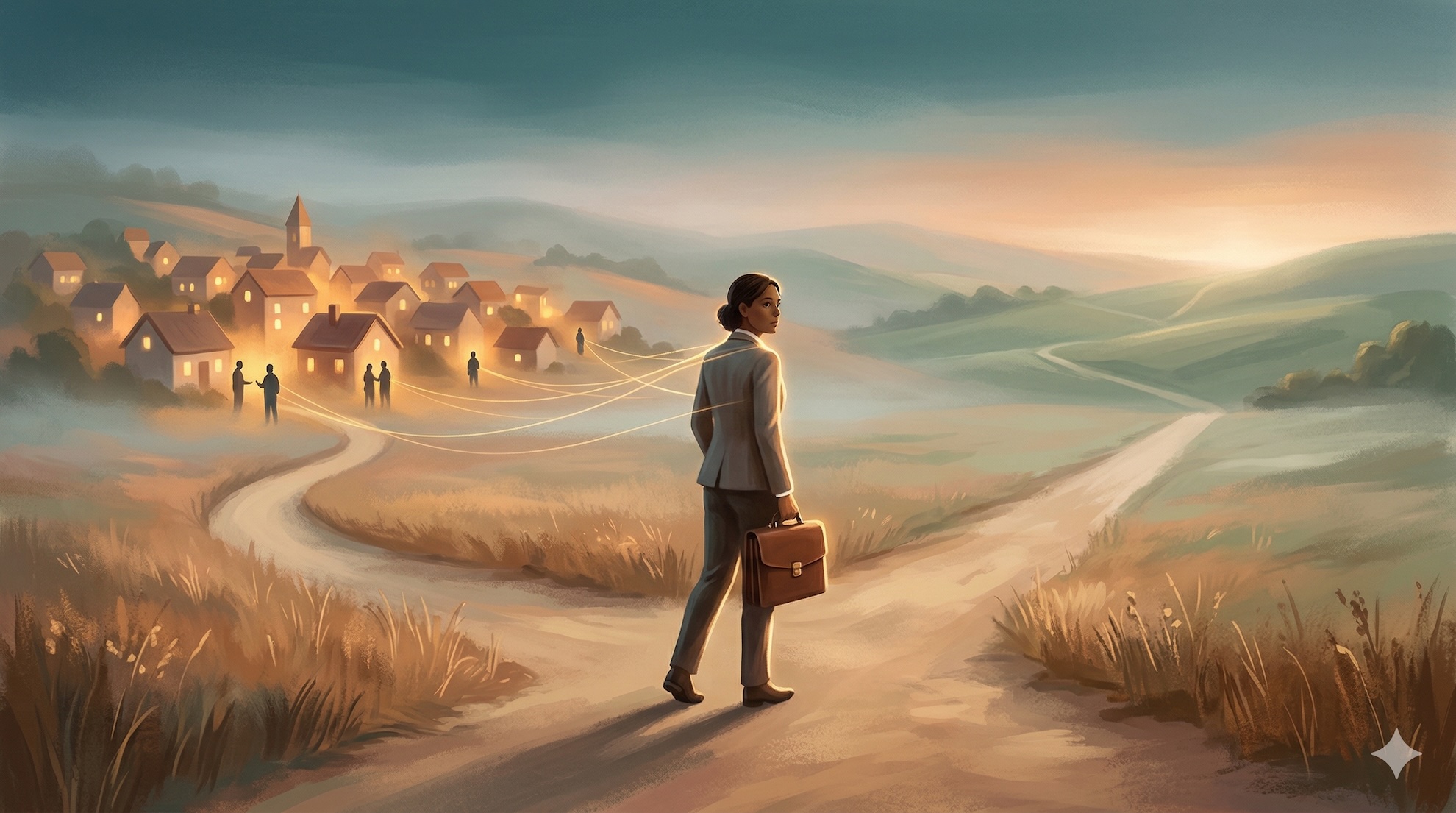
This is the study's central claim, and the one that breaks with earlier work. Resilience is usually framed as a moment — a fault line between before and after a single event. Formans shows it as cumulative. Winning one battle topped up the firm's resolve, its relationships and its shared sense of purpose, so it walked into the next adversity stronger than it left the last. Lance even recycled tactics: the threat of legal action that broke the insurance deadlock reappeared, almost word for word, against the Olympic authorities. By the time the pandemic hit, the family could tell itself, with reason, that it had done this before.
But fortitude can curdle into overconfidence
The authors refuse to sell fortitude as an unqualified good, and this is the finding worth pinning up for advisors. During the pandemic, riding a wave of success, Lance posted a tweet that offended the shopping channel carrying the firm's products. Buoyed by his own conviction, he pushed back instead of smoothing it over — and lost the contract, along with what had become the business's single biggest customer. Strength had tipped into a feeling of invincibility, and the firm stopped reading the room.
Takeaways for family business leaders
For owners and advisors, the study reads less like a survival story and more like a set of choices made long before trouble arrives.
- Treat fortitude as inventory, not heroics. Relationships, financial buffers and a shared story are built in the calm and spent in the storm.
- Name your linchpin honestly. Formans worked because one trusted person could move family and firm resources together — but that also concentrated enormous risk in a single person's judgement.
- Reserve the right to pivot. Every Forman recovery added something. Plan rebuilds as upgrades, not restorations.
- Watch for the win that goes to your head. After a run of successes, deliberately seek the outside view you have stopped feeling you need.
Impact
We are, by many accounts, living through a polycrisis — shocks that arrive in waves rather than one at a time. If that is right, the familiar picture of resilience as bouncing back from a single event is out of date. This study offers a more useful frame: organizations carry a stock of conviction, relationships and shared values that compounds across crises, for better and, occasionally, for worse.
The lessons reach past family firms. Any organization sitting across overlapping systems — a social enterprise, a public–private partnership — may build its own version of fortitude through whoever bridges those worlds. What family firms make unusually visible is the pull of heritage and the role of a single committed steward; the underlying mechanism is more general than salmon and East London.
Recommendations
- Audit your reserves before the next shock — financial slack, the scope of your insurance, and the outside relationships you would lean on in an emergency.
- Make sure one person, or a small trusted group, can act decisively across both the family and the business when speed matters.
- After each disruption, ask what the recovery could add to the business, not only what it should restore.
- Build a deliberate check on overconfidence after a winning streak — a board voice or advisor with standing permission to disagree.
- Write down and retell the story of crises already survived. That shared narrative is itself a resource for facing the next one.

CeFEO's Authors
CeFEO counts more than 50 scholars and 30 affiliated researchers. Several studies and reports have consistently identified CeFEO as a leading research environment worldwide in the area of ownership and family business studies.
This research project, has been co-authored by the following CeFEO Members.

Reference
Spotlight highlights research-based findings only. If you’re interested in exploring this project further or delving into the theoretical and methodological details, we encourage you to contact the authors or read the full article for a comprehensive understanding.

Smith, C., Rondi, E., De Massis, A., & Nordqvist, M. (2024). Rising every time we fall: Organizational fortitude and response to adversities. Journal of Management, 50(5), 1865–1910. https://doi.org/10.1177/01492063231164969
https://doi.org/10.1177/01492063231164969
What is Spotlight?
Spotlight is an innovative online family business magazine designed to bridge the gap between cutting-edge research and the real-world needs of practitioners, owners, and policymakers. Drawing on the latest findings from the Centre for Family Entrepreneurship and Ownership (CeFEO) at Jönköping International Business School, Spotlight delivers insightful, accessible summaries of key research topics. Our mission is to keep the family business community informed and empowered by offering actionable insights, expert analyses, and forward-thinking strategies that enhance business leadership and ownership practices for long-term success.
This article is brought to you by the WIFU Foundation
Spotlight is generously supported by the WIFU Foundation, which promotes research, education, and dialogue in the field of family business. This partnership enables us to continue bridging academic insights and real-world practice for the advancement of responsible family entrepreneurship and ownership.
CeFEO's Authors
CeFEO counts more than 50 scholars and 30 affiliated researchers. Several studies and reports have consistently identified CeFEO as a leading research environment worldwide in the area of ownership and family business studies. This research project, has been co-authored by the following CeFEO Members.
Reference
Spotlight highlights research-based findings only. If you’re interested in exploring this project further or delving into the theoretical and methodological details, we encourage you to contact the authors or read the full article for a comprehensive understanding.
Smith, C., Rondi, E., De Massis, A., & Nordqvist, M. (2024). Rising every time we fall: Organizational fortitude and response to adversities. Journal of Management, 50(5), 1865–1910. https://doi.org/10.1177/01492063231164969
https://doi.org/10.1177/01492063231164969
What is Spotlight?
Spotlight is an innovative, AI-powered, online family business magazine designed to bridge the gap between cutting-edge research and the real-world needs of practitioners, owners, and policymakers. Drawing on the latest findings from the Centre for Family Entrepreneurship and Ownership (CeFEO) at Jönköping International Business School, Spotlight delivers insightful, accessible summaries of key research topics. Our mission is to keep the family business community informed and empowered by offering actionable insights, expert analyses, and forward-thinking strategies that enhance business leadership and ownership practices for long-term success.
This article is brought to you by the WIFU Foundation
Spotlight is generously supported by the WIFU Foundation, which promotes research, education, and dialogue in the field of family business. This partnership enables us to continue bridging academic insights and real-world practice for the advancement of responsible family entrepreneurship and ownership.